
When Your HVAC Fails in Summer, the Clock Starts Immediately
A commercial or industrial HVAC system doesn’t usually fail at a convenient time. It fails on the hottest day of the year, during peak operating hours, in the middle of a production run, or on a Friday afternoon when your service contractor’s next available slot is Tuesday.
What happens in the hours between failure and repair determines a lot. In facilities where temperature isn’t just a comfort issue but a safety and operational one, that gap can mean lost production, damaged inventory, unsafe conditions for workers, or equipment that goes offline to protect itself.
Temporary cooling rental exists specifically to close that gap. But getting the right equipment deployed fast requires knowing what you’re dealing with before the emergency happens.
Here’s what facility managers, operations teams, and property managers need to understand about emergency cooling so that if it happens, the response is measured rather than reactive.
Why Summer AC Failures Are More Than an Inconvenience
In winter, an HVAC failure is uncomfortable. In summer, it compounds quickly.
Ambient temperatures inside commercial and industrial buildings without active cooling can climb 20 to 30 degrees above outdoor temperatures within a few hours, depending on the building envelope, occupancy, and the heat load generated by equipment and processes inside. In a warehouse, that means inventory risk. In a manufacturing facility, it means worker safety and potential production shutdown. In a data center or server room, it means equipment protection thresholds can be crossed in under an hour. In a healthcare setting, patient safety and equipment function both become immediate concerns.
The stakes vary by facility type, but the time pressure is consistent. Every hour without climate control is an hour where the situation is getting worse, not holding steady.
Understanding that dynamic is the starting point for a good emergency response plan.
The Most Common Causes of Summer AC Failures
Not every failure is a surprise. Some of the most disruptive summer cooling emergencies are the result of deferred maintenance catching up at the worst possible moment. Others are genuinely unpredictable.
Compressor failure is the most common cause of complete cooling loss in commercial systems. Compressors work harder during summer heat, and units that haven’t been serviced are significantly more vulnerable during peak demand periods.
Refrigerant leaks reduce system efficiency gradually until the unit can no longer maintain target temperatures. By the time the problem is obvious, the system has often been struggling for weeks.
Electrical failures including capacitor failures, contactor wear, and wiring issues are more common in older systems and in facilities with high electrical demand during summer months.
Cooling tower and chiller issues affect larger industrial and commercial facilities, where the cooling system is more complex and failures have broader operational impact.
Overload during heat events is increasingly common as summer temperatures push above the design parameters of systems that were sized for typical conditions, not record heat. When outdoor temperatures stay elevated for consecutive days, systems that would normally recover overnight instead continue to operate at or beyond capacity until something gives.
In all of these scenarios, the repair timeline is often longer than the situation can tolerate. That’s where rental equipment steps in.
What Emergency Cooling Rental Actually Looks Like
When a cooling emergency happens, the first call to a rental partner should answer three questions: What’s the space? What’s the application? How fast do you need it?
The answers drive equipment selection, sizing, and deployment.
For enclosed commercial spaces, including offices, retail environments, and property management situations, portable air conditioners are typically the fastest path to restored comfort. They can be positioned, vented, and running in hours. Sizing is based on square footage, ceiling height, and the heat load generated by people and equipment in the space.
For industrial and manufacturing environments, the cooling requirement is more complex. Spot coolers can address localized hot zones on production floors, protecting equipment and giving workers relief in specific areas without requiring a facility-wide solution. For larger-scale cooling needs, portable chillers and air handlers can integrate with existing ductwork or operate independently to manage larger heat loads.
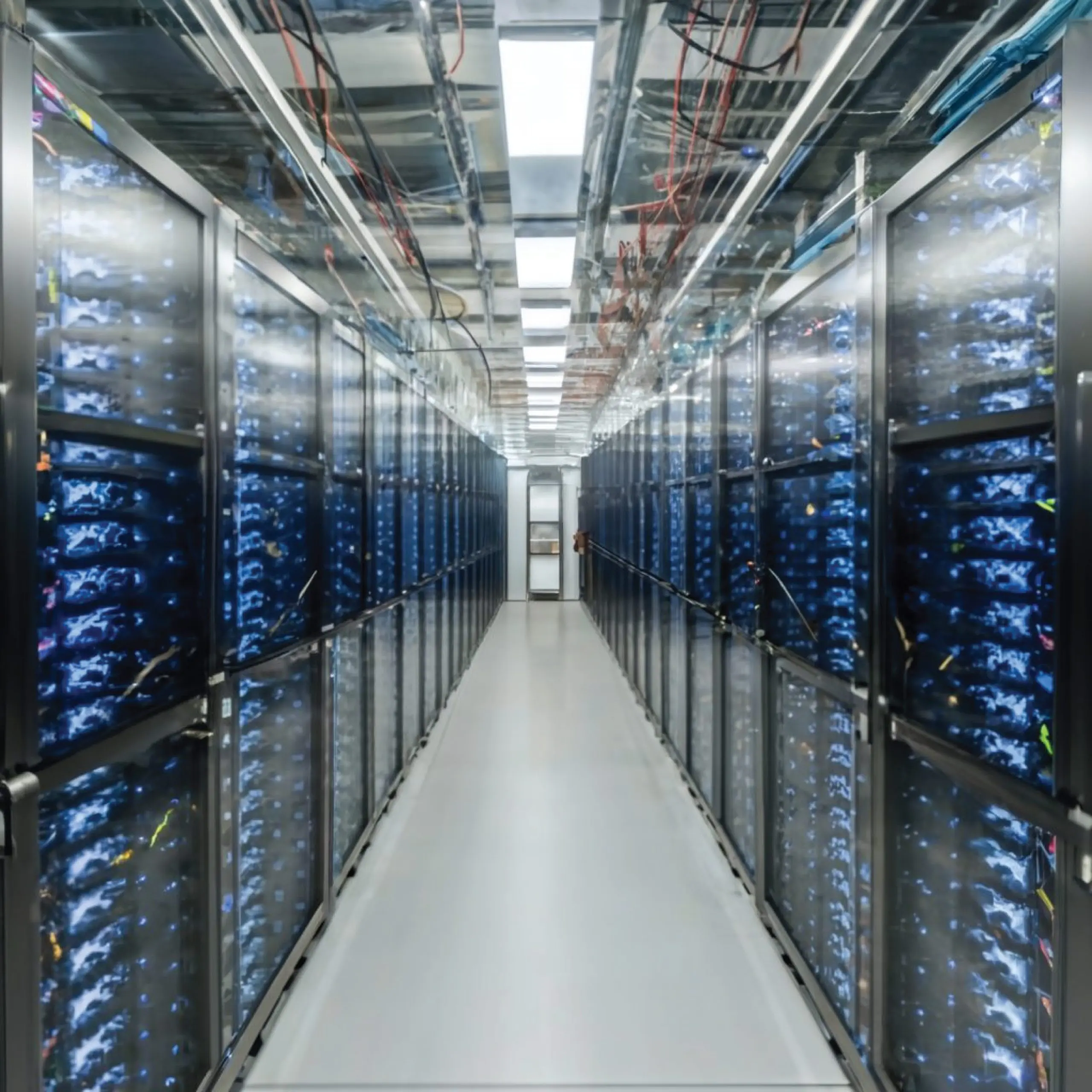
For data centers and server rooms, precision matters more than speed, though both are critical. The equipment needs to manage not just temperature but humidity, and it needs to be positioned to address the specific thermal load of the racks and equipment generating heat. Spot coolers are commonly used for targeted hot spot management, while portable precision cooling units handle more controlled environments.
For healthcare facilities, cooling solutions need to account for patient areas, operating environments, and sensitive medical equipment simultaneously. These situations often require equipment pre-staged and sized by application rather than a one-size response.
For warehouses and distribution centers, the scale of the space means cooling solutions focus on worker safety zones, temperature-sensitive inventory areas, and staging areas rather than conditioning the entire building volume.
In all cases, a good rental partner doesn’t just drop off equipment. They help assess the space, recommend the right configuration, and stay available while the rental is in place.
The Lead Time Reality for Emergency Cooling
One of the most important things to understand about emergency cooling is that “emergency” doesn’t mean instantaneous.
Rental equipment needs to be available in your region, loaded and transported to the site, positioned and connected, and confirmed to be running correctly before your situation is resolved. Reputable partners maintain emergency response capability and can deploy same-day or next-day in most markets, but that timeline depends heavily on equipment availability and distance.
Summer is the highest-demand period for cooling equipment. Inventory that’s available in April may not be available on a Wednesday in July during a regional heat event. Facilities that have established relationships with a rental partner before an emergency occurs are in a meaningfully better position than those calling for the first time during a crisis.
This is the strongest argument for thinking about emergency cooling before you need it. Not purchasing equipment in advance, but identifying a partner, understanding your facility’s cooling requirements, and having a plan that can be executed quickly when the situation arises.
Planned Outages Deserve the Same Attention
Not every cooling gap is an emergency. Planned HVAC maintenance, equipment replacement, and system upgrades create predictable windows where a facility’s permanent cooling is offline. These situations are easier to plan for but carry the same operational risks if temporary cooling isn’t addressed in advance.
Chiller replacements can take days to weeks. Ductwork modifications take systems offline during installation. Control system upgrades require equipment to be shut down for testing. In all of these cases, a building can’t simply close or pause operations. Temporary cooling bridges the gap between the planned outage and restored capacity.
The advantage of a planned outage is that there’s time to size the solution correctly, stage equipment before the permanent system goes offline, and confirm the rental plan is adequate before operations depend on it. That’s a significantly better position than deploying equipment reactively after conditions have already become a problem.
What to Look for in an Emergency Cooling Partner
When a cooling emergency happens, the quality of the response depends largely on who you’re calling.
Response time matters, but it’s not the only factor. Equipment availability across a range of solution types and sizes, technical expertise to help assess and configure the deployment, 24/7 availability including nights and weekends when emergencies don’t follow business hours, and the ability to scale the solution if the first response isn’t sufficient are all part of what distinguishes a capable emergency cooling partner from a basic rental transaction.
Experience with specific facility types also matters. A partner who has handled data center cooling emergencies understands different requirements than one who has primarily supported construction sites. The questions they ask and the solutions they recommend will reflect that experience.
At 1Source Rentals, emergency response is part of how we operate, not an exception to it. Our team is available around the clock, our fleet covers the range of cooling solutions that commercial and industrial facilities actually need, and our approach starts with understanding the environment before recommending equipment.
If your facility doesn’t have an emergency cooling plan, now is the right time to build one with the right partner who can mobilize quickly. Contact a local 1Source Rentals representative to talk through your facility’s needs before the next heat event puts your system to the test.