
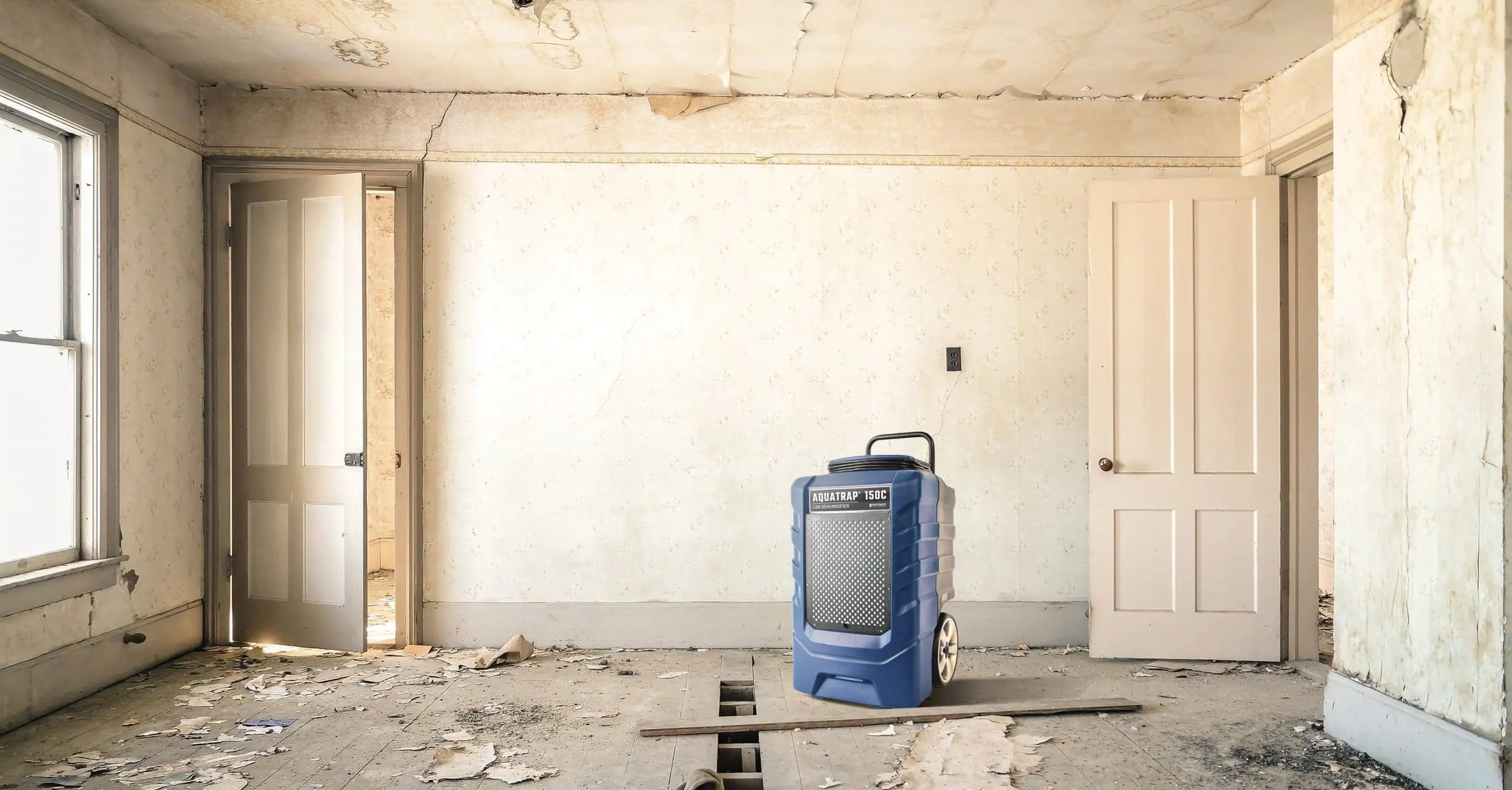
When winter conditions impact a jobsite or facility, temperature is usually the first concern. Cold air affects people, materials, and timelines, which is why temporary heating is often deployed during colder months.
What is less obvious, but just as important, is moisture.
In winter operations, heated spaces are not always dry spaces. In fact, cold weather can introduce moisture challenges that are easy to overlook until they start causing delays, material issues, or safety concerns. This is where dehumidification becomes a critical part of winter environmental control.
Where winter moisture comes from
Moisture problems in winter are often unexpected because cold air is typically associated with dry conditions. However, several common factors can introduce excess moisture into enclosed or semi-enclosed spaces.
Temperature differentials play a major role. When warm air meets cold surfaces, condensation can form on walls, ceilings, equipment, and materials. This is especially common in temporary enclosures, warehouses, and partially completed structures.
Snow, ice, and tracked-in moisture are also contributors. Foot traffic, equipment, and materials bring moisture indoors, where it can accumulate if ventilation is limited.
In some environments, combustion-based heating systems can add moisture to the air. Without proper ventilation and balance, this can worsen condensation issues rather than resolve them.
Why excess moisture causes problems in winter
Unchecked moisture can create challenges that go beyond discomfort.
Materials such as wood, drywall, insulation, and coatings are sensitive to humidity levels. Excess moisture can slow curing times, compromise finishes, or lead to rework.
Moisture can also create safety risks. Condensation on floors and surfaces increases the likelihood of slips, while damp environments can affect electrical equipment and tools.
In longer-duration projects or enclosed facilities, persistent moisture may lead to mold growth or indoor air quality concerns, creating additional complications.
When dehumidification is needed during cold weather
Dehumidification is commonly used in winter when spaces are enclosed, heated, or both.
Construction projects often rely on dehumidification during interior build phases, especially when finishes, coatings, or flooring are involved. Industrial facilities may use dehumidifiers during maintenance shutdowns or equipment servicing when moisture control is critical.
Warehouses, temporary structures, and event-related enclosures can also benefit from dehumidification when heating alone does not address condensation or humidity buildup.
In these scenarios, dehumidification is not a replacement for heating. It is a complementary solution that helps stabilize the environment as a whole.
Heating and dehumidification work best together
One of the most common misconceptions in winter operations is that increasing heat will solve moisture problems. In reality, heating without moisture control can sometimes make condensation worse.
Balanced environmental control considers both temperature and humidity. Heating raises air temperature, while dehumidification removes excess moisture, helping maintain stable and predictable conditions.
This combined approach supports safer environments, protects materials, and reduces the risk of delays caused by drying or curing issues.
Why rental dehumidification is a critical step for projects in winter
Winter moisture challenges are often temporary and project-specific. Renting dehumidification equipment allows teams to scale solutions based on current conditions without committing to permanent infrastructure.
Rental solutions also provide flexibility when conditions change. As projects move from open-air phases to enclosed interiors, dehumidification needs may increase or decrease accordingly.
At 1Source Rentals, dehumidification solutions are selected based on environment, duration, and application, not just equipment availability.
Thinking beyond temperature this winter
Winter readiness is about more than staying warm. It is about maintaining control over the entire climate of the environment.
By considering moisture alongside temperature, teams can avoid common winter pitfalls and create conditions that support safety, quality, and efficiency.
If cold weather and moisture are creating challenges for your project , connecting with an experienced and knowledgeable partner will help ensure the right plan from the start.
Contact a local 1Source Rentals representative to discuss temporary heating and dehumidification solutions for your winter needs.