
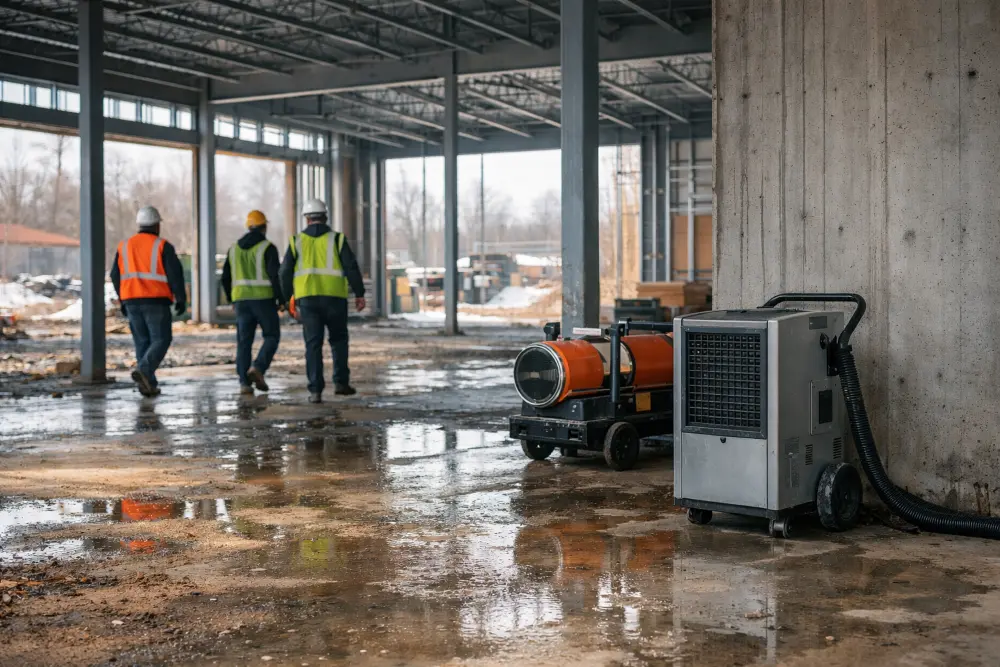
As winter begins to loosen its grip, jobsites enter a transition period that can be just as challenging as the coldest weeks of the season. Temperatures fluctuate, snow melts, and ground conditions change quickly.
While crews may welcome the warmer weather, the spring thaw introduces a new set of operational concerns. Moisture, mud, and humidity can affect both outdoor work areas and indoor project environments. Without proper planning, these conditions can slow progress and create avoidable complications.
Understanding how environmental conditions shift during this time of year helps teams keep projects moving safely and efficiently.
Why the Spring Thaw Creates New Jobsite Challenges
During the winter months, moisture in the ground is often frozen and relatively stable. When temperatures rise, that stability disappears.
Snow begins to melt. Frozen soil softens. Water that was locked in place starts moving.
These changes can lead to several jobsite issues:
- Muddy access roads and staging areas
- Water intrusion in partially enclosed structures
- Higher humidity levels inside buildings under construction
- Condensation forming on cold surfaces
- Slower curing times for certain materials
Even a few warm days can significantly alter site conditions. Teams that plan for this transition are often able to maintain steadier progress than those that react after problems appear.
The Hidden Impact of Moisture on Materials and Timelines
Moisture does not always stop work entirely, but it can quietly affect the quality and timing of several common construction tasks.
For example, interior work often becomes more sensitive to environmental conditions as projects move forward.
Consider how excess humidity can influence:
- Drywall finishing and joint compound curing
- Paint and coating application
- Adhesives used for flooring or tile
- Wood products that can absorb moisture and expand
- Insulation installation in enclosed spaces
When humidity levels rise unexpectedly, materials may take longer to cure or dry. In some cases, work may need to be repeated if environmental conditions were not stable during application.
Maintaining consistent indoor conditions becomes increasingly important as projects move into finishing phases.
Heating Still Plays a Role in Early Spring
Even as daytime temperatures improve, early spring often brings unpredictable weather patterns. Overnight freezes and cold snaps remain common in many regions.
Temporary heating can still be an important tool for maintaining workable conditions.
Heating solutions may help teams:
- Stabilize temperatures for curing materials
- Keep work areas safe and comfortable for crews
- Prevent freezing in enclosed spaces
- Reduce condensation caused by cold interior surfaces
Heating alone does not always solve moisture challenges, but it often works best when combined with proper airflow and humidity management.
Why Dehumidification Becomes More Important This Time of Year
As the ground thaws and outside moisture levels increase, indoor environments can begin to trap humidity.
Partially enclosed buildings are especially vulnerable. Warm air inside the structure can hold moisture, which then condenses when it meets cooler surfaces such as metal framing, windows, or unfinished walls.
This is where dehumidification often becomes part of the conversation.
Dehumidifiers help remove excess moisture from the air and can support more stable interior conditions. When paired with heating or ventilation, they help teams manage humidity levels more effectively during seasonal transitions.
In many cases, addressing moisture early can prevent delays later in the project.
Stabilizing Indoor Conditions During Seasonal Change
Environmental control during the spring thaw usually involves more than a single piece of equipment. Instead, crews often think in terms of balancing several factors.
A practical approach often includes attention to:
- Temperature stability
- Humidity levels
- Air circulation and ventilation
- Equipment placement within the structure
- Timing of interior work phases
Small adjustments can make a noticeable difference. For example, improving airflow in an enclosed space may help reduce condensation. In other cases, combining heating and dehumidification may produce the most reliable results.
Each jobsite is different, but the goal is generally the same: create conditions that allow materials and crews to perform as expected.
Planning Ahead for Spring Projects
Spring is often one of the busiest times of the year for construction and facility projects. As schedules accelerate, environmental conditions can quickly become an overlooked variable.
Taking a few steps early can help avoid unnecessary disruptions.
Teams may benefit from considering:
- How melting snow or ground saturation might affect site access
- Whether enclosed structures may trap humidity
- If interior work requires stable temperature and moisture levels
- What equipment may be needed to maintain those conditions
Planning ahead allows crews to focus on progress instead of reacting to changing weather patterns.
At 1Source Rentals, we work with teams to support temporary heating, dehumidification, and environmental control solutions that help keep projects moving during seasonal transitions.
If your project is entering the spring phase, now is a good time to think about how changing conditions might affect your schedule and materials.